Gas Line Repair in Plano & DFW

If you smell gas in your home — leave immediately. Don't flip switches, use your phone inside, or try to find the leak yourself. Call 911 and your gas utility from outside, then call us.

Gas Leak Safety — What To Do First

If you smell rotten egg odor (the odorant added to natural gas), leave the building immediately. Don’t turn lights on or off. Don’t use your phone until you’re outside. Don’t re-enter. Call 911 and your gas utility from outside the building. Once they clear the scene and shut off supply, call us to repair and pressure test the line before service is restored. This is the correct sequence — every time.

Non-Emergency Gas Line Issues

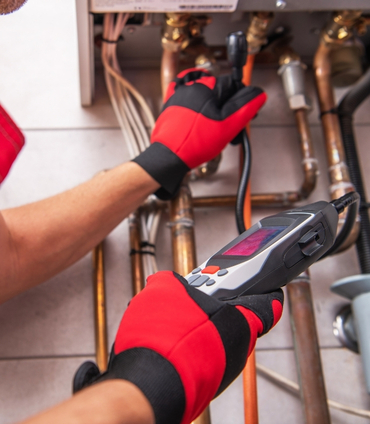
Not every gas line problem is a leak. We also handle: corroded or aging black iron gas pipe replacement, flexible connector repairs behind appliances, flexible CSST (corrugated stainless) bonding and repair, gas supply pressure issues to appliances, and post-repair pressure testing required by code before the utility restores service.

Code-Compliant Work

All gas line work is permitted and pressure-tested to meet Texas code. We coordinate with your gas utility on service restoration. No gas line work should go uninspected.

Everything We Offer

  • Gas leak repair (after utility shutoff)
  • Black iron pipe repair and replacement
  • Flexible connector replacement
  • CSST bonding and repair
  • Appliance supply line repair
  • Gas pressure testing
  • Permit pulling and inspection coordination
  • Post-repair utility service restoration coordination

Gas Line Repair in Plano & DFW — Common Questions

Straight answers before you call.

What should I do if I smell gas?

Leave immediately. Don't turn any switches on or off — even a light switch can spark. Don't use your phone until you're outside. Call 911 and your gas utility from outside. Do not re-enter until they give the all-clear. Then call us for repair.

Can you repair a gas line the same day?

Yes, once the gas utility has shut off supply to the affected area and cleared the scene. We arrive, locate the leak, repair or replace the damaged section, pressure test to code, and coordinate with the utility on service restoration.

What causes gas line leaks?

Most commonly: corroded fittings on older black iron pipe, damaged flexible connectors behind gas appliances, physical damage during construction or landscaping, and settling or movement that stresses pipe joints. CSST (flexible corrugated line) requires proper bonding to prevent arc damage.

Do you need a permit for gas line repair?

Yes. All gas line work in Texas requires a permit and pressure test inspection. We handle that — you don't have to manage it separately.

Is CSST (flexible corrugated gas line) safe?

CSST is code-approved and commonly used, but it requires proper electrical bonding to prevent arc damage during lightning events. If your home has CSST that isn't bonded, we can inspect and add the required bonding.