
Call 682-284-0966 — 24/7 emergency slab leak response. Average 45-minute arrival across Plano, Allen, Frisco, and McKinney.
What Is a Slab Leak?
A slab leak is a break, crack, or pinhole failure in the water lines running beneath your home’s concrete foundation. Hot and cold supply lines in most Plano homes built before 2000 run under — or directly through — the slab. When those pipes fail, water seeps into the soil beneath your foundation, and the consequences compound quickly: wasted water, structural soil movement, mold, and eventually foundation damage that costs far more to fix than the leak itself.
Every day a slab leak goes unaddressed, the repair cost grows.
Why Slab Leaks Are Common in Plano
Plano and the surrounding Collin County area sits on expansive black clay soil that swells when wet and contracts severely during drought. That constant movement stresses under-slab copper pipes — the material used in most homes built between 1970 and 1995. Add Plano’s hard water (15–20 grains per gallon), which accelerates internal pipe corrosion from the inside, and the failure rate in this market is higher than most of the country.
North Texas drought-to-rain cycles create the most dangerous conditions. Extended dry periods shrink the clay, drop foundation support, and leave pipes spanning voids they were never designed to cross. When the rains return, the soil surges back — and that’s when pipes that were already stressed give out.
Warning Signs of a Slab Leak
Call us if you notice any of these. Early detection typically saves $3,000–$8,000 in additional repair costs.
- Unexplained increase in your water bill — even a small slab leak wastes hundreds of gallons monthly
- Sound of running water when every fixture in the house is off
- Warm or hot spots on tile, hardwood, or carpet — indicates a hot water line break below
- Foundation cracks appearing in walls or floors
- Mildew smell or moisture under carpeting with no visible source
- Reduced water pressure throughout the home
- Soggy patches of yard during dry weather
- Doors or windows that suddenly don’t close properly
How We Detect Slab Leaks
We use three non-invasive methods before any concrete is touched.
Electronic Acoustic Detection. Specialized listening equipment picks up the specific sound frequencies water makes as it escapes under pressure through a crack or pinhole. We can pinpoint the leak location to within a few inches, which means minimal excavation.
Infrared Thermal Imaging. Professional-grade thermal cameras detect temperature variations in your slab. A hot water leak creates a heat signature visible through the camera. This confirms the detection and maps the leak’s spread.
Pressure Testing. We isolate sections of your plumbing and measure pressure drop to identify which line is failing and where. Used in combination with acoustic and thermal methods, this gives us a complete picture before we recommend any repair approach.
Slab Leak Repair Options
The right repair depends on your pipe age, leak location, floor covering, and whether this is a first failure or part of a larger pattern.
Spot Repair — We access the leak directly, cut a small opening in the slab, and fix the specific failure point. Best for newer pipes in otherwise good condition with a single, localized leak.
Pipe Rerouting — We abandon the failed under-slab section and run new copper or PEX lines through walls or the attic, bypassing the slab entirely. No more under-slab exposure. Best for pipes that are showing age-related wear beyond one location.
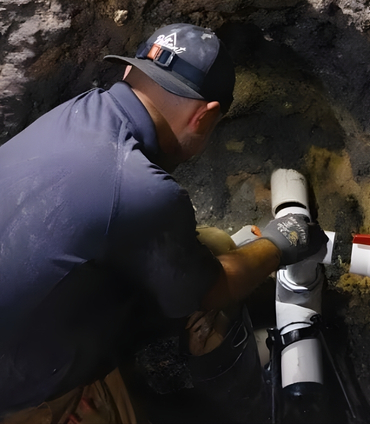
Tunneling — We dig under the slab from the exterior perimeter rather than cutting through your flooring. Best when you have expensive tile or hardwood you need to protect. Most homeowner insurance policies cover tunneling access costs.
Full Repipe — When inspection reveals system-wide pipe deterioration, a whole-home repipe in PEX eliminates the problem permanently and typically costs less than repeated slab repairs over time.
Preventing Future Slab Leaks
- Install a pressure-reducing valve if city supply pressure exceeds 80 PSI. High pressure is the #1 cause of early pipe failure in Plano.
- Use soaker hoses during drought months to keep foundation soil moisture consistent and prevent the expansion/contraction cycle that stresses pipes.
- Schedule an annual plumbing inspection — catching early signs of pipe deterioration costs a fraction of emergency repair.
- Consider a whole-home water softener. Plano’s hard water accelerates corrosion on copper pipes from the inside.
Why Plano Homeowners Call Staggs Plumbing
Staggs Plumbing has served the Plano area since 1990. Randy Staggs holds Texas Master Plumber License #M-17697 — the highest certification issued by the Texas State Board of Plumbing Examiners. We carry $2 million in general liability insurance with workers’ compensation on all employees, and every job comes with a 2-year labor warranty. We provide flat-rate written estimates before any work begins.
We also assist with insurance documentation. Most homeowner policies cover the cost of locating and accessing the leak, and we work with your adjuster directly to document the failure and access method.