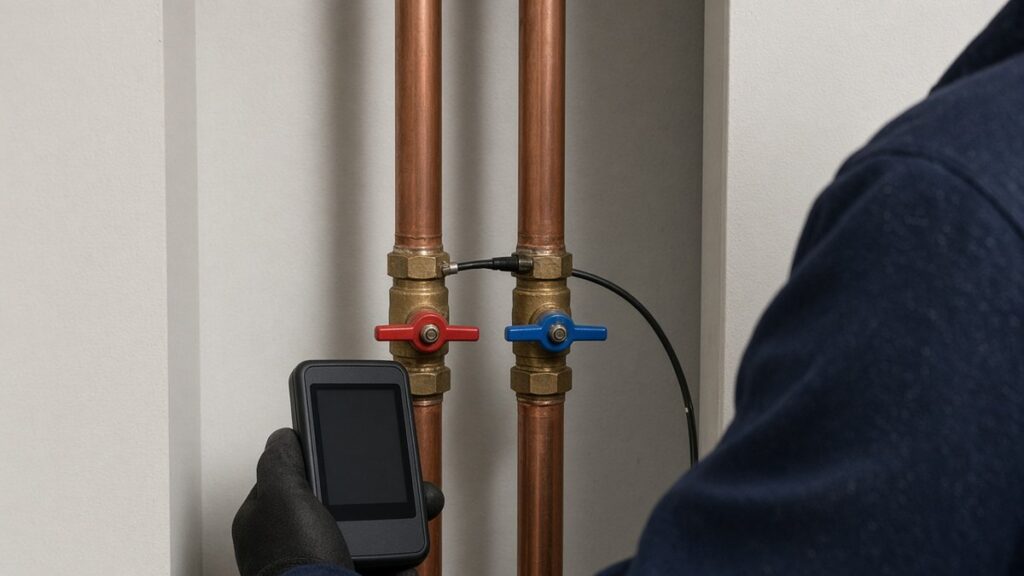
If the water meter keeps moving with fixtures off, close the valve above the water heater. Meter stops? Suspect hot. Meter keeps spinning? Suspect cold. That one test narrows a slab leak before anyone digs.
Not every under-slab leak is a hot-water line, even though warm floors get the headlines. Cold-line leaks are common too — and they will not heat the floor the same way. Narrowing hot vs cold early saves time and keeps the repair honest. This is the method used on Hunter H.’s Dallas 17-foot tunnel job.
Start with the meter
With every fixture off, watch the meter’s flow indicator or dial. Movement means water is leaving the system somewhere. No movement means you may be dealing with a different issue (or an intermittent leak). More symptom context sits in signs of a slab leak.
The water-heater shutoff test
- Confirm the meter is moving with fixtures off.
- Close the cold-supply valve that feeds the water heater (the valve above or next to most tanks).
- Watch the meter again.
- Meter stops: water was moving through the heater into the hot system — lean toward a hot-side leak.
- Meter keeps moving: water is still leaving on the cold distribution — lean toward a cold-side leak.
Hunter’s meter kept rotating after the heater valve closed, so we hunted a cold line under the hallway and marked a blue X before tunneling from outside.
What hot leaks often feel like
Hot-side slab leaks can create warm or hot spots on floors, raise the electric or gas bill slightly from reheating, and occasionally send lukewarm water to “cold” fixtures if pressures mix. They are not the only cause of a warm floor, but they are high on the list.
What cold leaks often feel like
Cold-side leaks may show no warm spot at all. You might only hear water, see the meter move, notice a usage spike, or find soft soil at the slab edge. Skipping the heater-valve test is how cold leaks get mislabeled.
After isolation
Acoustic and electronic detection pinpoint the spot. Then you choose access: tunneling vs break-out. City help is a click away on pages like Dallas slab leak repair.
Staggs Plumbing is registered as a plumbing contractor in every city we serve. Upfront written pricing before work starts. Call (682) 284-0966 and we will run the isolation with you so the plan matches the line that actually failed.
Frequently asked questions
Can both hot and cold leak at once?
Yes, especially on aging copper. Fixing the loudest leak first can reveal a quieter second failure on re-test.
What if I do not have a valve above the heater?
Some installations differ. A plumber can isolate at other points. Do not force a stuck valve.
Does a cold leak still need tunneling?
Access depends on location, not only hot vs cold. Cold leaks under finished floors are tunneled often.
How quickly can isolation be scheduled?
We schedule diagnosis as promptly as the day’s board allows. Call and we will give you a straight answer for your day.
Serving Plano from our headquarters on F Avenue? See Plano slab leak repair for local detection and repair details.