
Dallas is the most architecturally varied city we serve. A slab leak in a 1950s Casa View ranch, a 1970s home in Far North Dallas and a 2015 townhome near Uptown can share the same symptom and need three completely different repairs. The diagnosis starts with knowing what was built, when, and on what ground.
Looking for general plumbing help? See our plumbing services in Dallas, or compare slab leak repair across Dallas-Fort Worth.
A century of Dallas housing, and what’s under it
U.S. Census (American Community Survey 2020–2024) data counts about 590,000 homes in Dallas. About 48% were built before 1980, the median home dates from about 1981, and roughly 127,000 homes, more than one in five, were built before 1960. Only about a quarter of the city’s homes date from 2000 or later. That’s a lot of decades-old pipe under a lot of concrete.
Dallas plumbing by era
M Streets, Lakewood, Kessler Park
Greenland Hills (the M Streets) and Kessler Park in north Oak Cliff were both platted in 1923–24. Homes this age often have cast-iron drains, galvanized or patched supply lines, and clay sewer lines now 70–100 years old. If your house sits on pier-and-beam with a crawlspace, under-floor leaks are reached from below instead of through a slab.
Casa View, Lake Highlands, Preston Hollow
The post-war building boom. Casa View Oaks east of White Rock Lake was built as about 200 ranch houses in 1954, and Lake Highlands filled in through the 1950s and 60s. These slab-on-grade ranches typically have galvanized or early copper supply and cast-iron drains under the concrete.
North Dallas and Far North Dallas
Largely slab construction on Blackland Prairie clay, from the Galleria area up toward the LBJ Freeway and beyond (75229, 75240, 75248). Under-slab copper here is 30–50 years old, the age when pinhole leaks start showing up.
Uptown, Preston Hollow teardowns, new townhomes
Modern rebuilds often sit on engineered or post-tension slabs with steel cables in the concrete. The pipe is newer, but leaks still happen at fittings or from soil movement, and the leak must be pinpointed before anyone cuts.
Why the ground under Dallas is hard on pipes
Dallas sits on layers of Cretaceous rock: the Eagle Ford shale, the Austin Chalk above it, and the Ozan (Taylor) marl, with river terraces and alluvium along the Trinity. Geologists who mapped the city list expansive soils and bedrock as one of Dallas’s three major engineering constraints, along with slope instability and flooding.
- Expansive clay across much of the city. USDA soil survey data shows about 37% of the mapped land inside Dallas is shrink-swell clay. The two biggest soil series are Houston Black and Austin clays (about 8% each), both very high-swell soils.
- The White Rock Escarpment. In southwest Dallas, the Austin Chalk caps a ridge over the Eagle Ford shale, whose clays are highly expansive and prone to swelling and erosion. The city adopted special hillside development rules along it.
- Lightly loaded buildings take the damage. Engineers note that most expansive-soil damage in Dallas is to light structures like houses on shallow slabs, not to big buildings anchored to bedrock.
When the clay dries in a Dallas summer it pulls away from the slab. When rain returns it swells back. Each cycle flexes the concrete and the pipes cast under it. Then a leak adds its own water, making one section of clay heave or washing soil out from under a drain. Learn more about what causes slab leaks in DFW.
How do I know if I have a slab leak?
- A Dallas Water Utilities bill that jumped with no change in how you use water. See what causes a high water bill.
- The meter’s leak indicator moving with every faucet, toilet, ice maker and sprinkler off.
- A warm spot in the floor, often on tile or hardwood, from a hot-water line under the slab.
- Hissing or running water you can hear with everything off.
- Sewer odor or repeat backups, which in pre-1970 homes can point to a broken cast-iron or clay drain under the house.
- Sticking doors, new drywall cracks, or tile cracking in a line, signs the soil under the slab is moving.
For more ways to check, see our guide to the signs of a slab leak.
How we handle a Dallas slab leak call
Confirm & locate
Pressure testing isolates the failing line, acoustic equipment narrows the spot to within a few inches, and thermal imaging reads a hot-water leak through the floor. Drain leaks get a sewer camera and hydrostatic test.
Show you the options
You see what we found and get a flat-rate written price for each realistic repair. No work starts until you approve it.
Make the repair
A licensed master plumber does the work with the smallest footprint the job allows: spot repair, reroute, tunneling, repipe, or a sewer fix.
Re-test & document
We pressure-test after the repair and give you the paperwork your insurer and Dallas Water Utilities ask for.
Read more about our leak detection services.
Recent Dallas slab leak job
A Dallas homeowner, Hunter H., called after hearing water movement in the front bathroom and the master bathroom. That sound is one of the classic early signs of a slab leak, so we started with the meter test.
What we found
With the curb stop open, the water meter’s digital flow indicator was spinning at a medium speed. We closed the valve above the water heater — and the meter kept spinning at that same medium speed. That told us the leak was on the cold-water side, not the hot line feeding the heater.
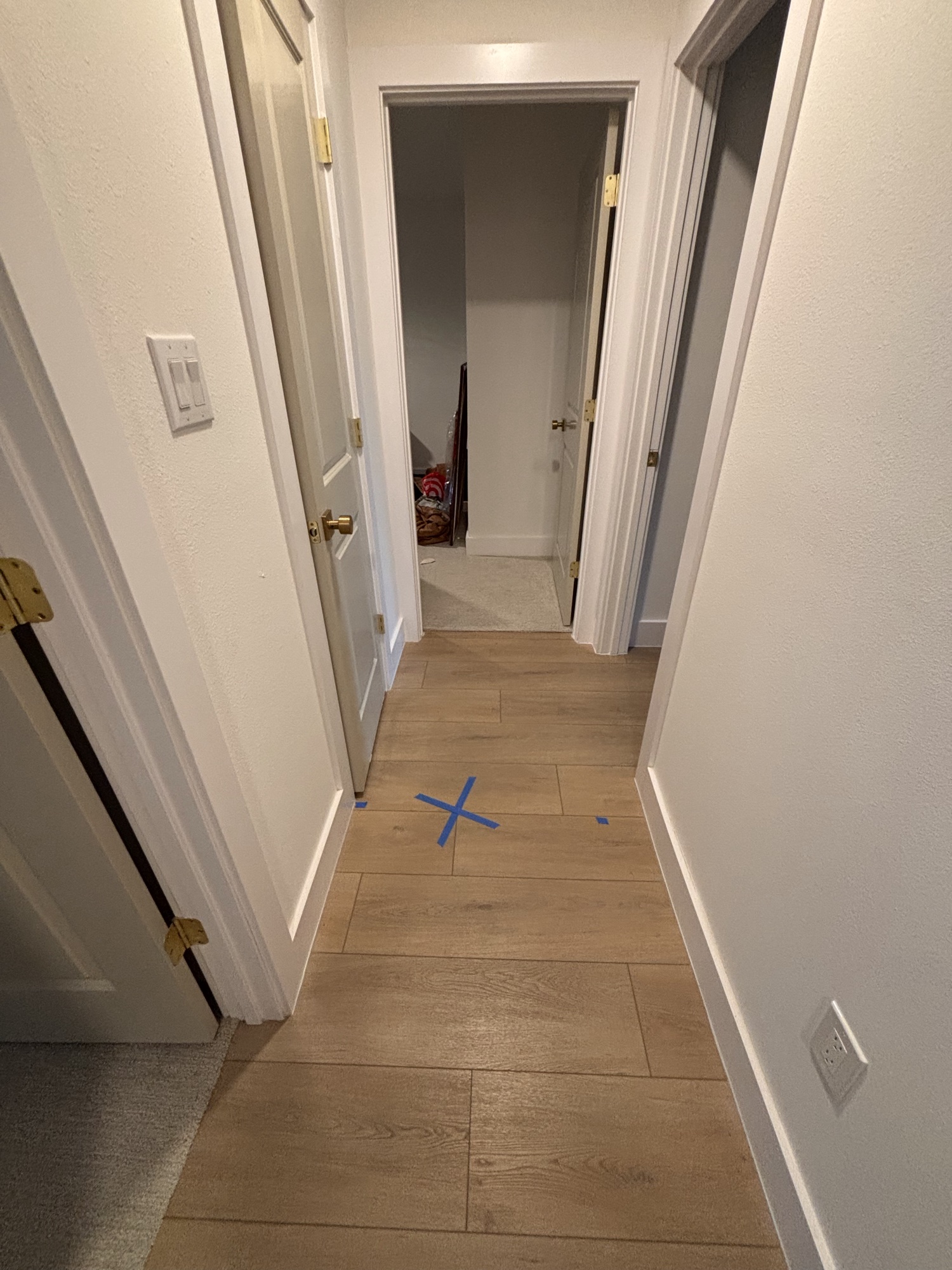
We pinpointed a cold-water leak under the floor in the left hallway. The blue tape X on the floor marks the spot. Line tracing was inconclusive, likely because PEX had been used in a remodel, which can make electronic locating harder. This leak was also in an area where a previous leak had already been repaired. Other leaks, if any, can’t be found until this one is fixed.
How we fixed it
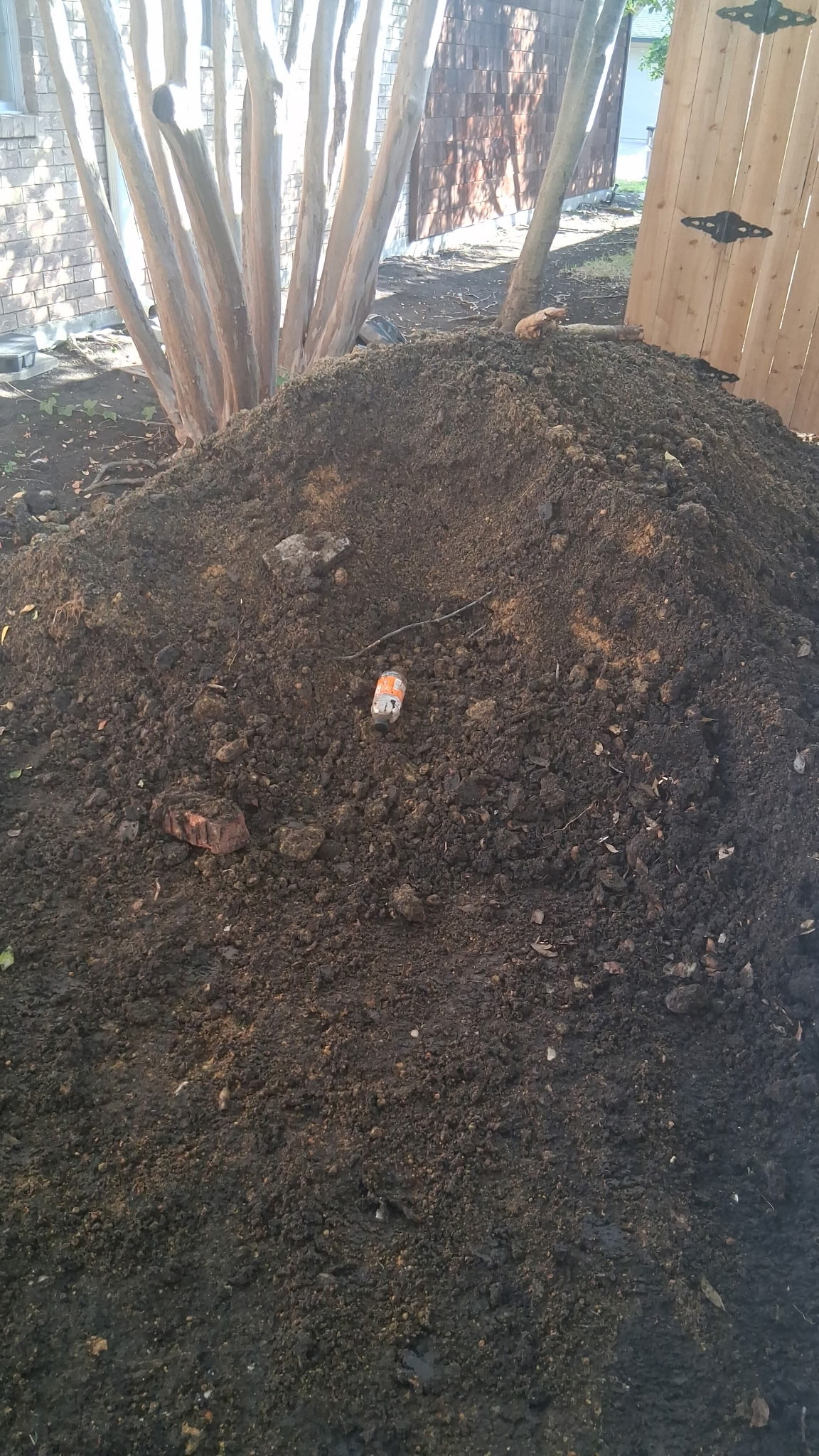
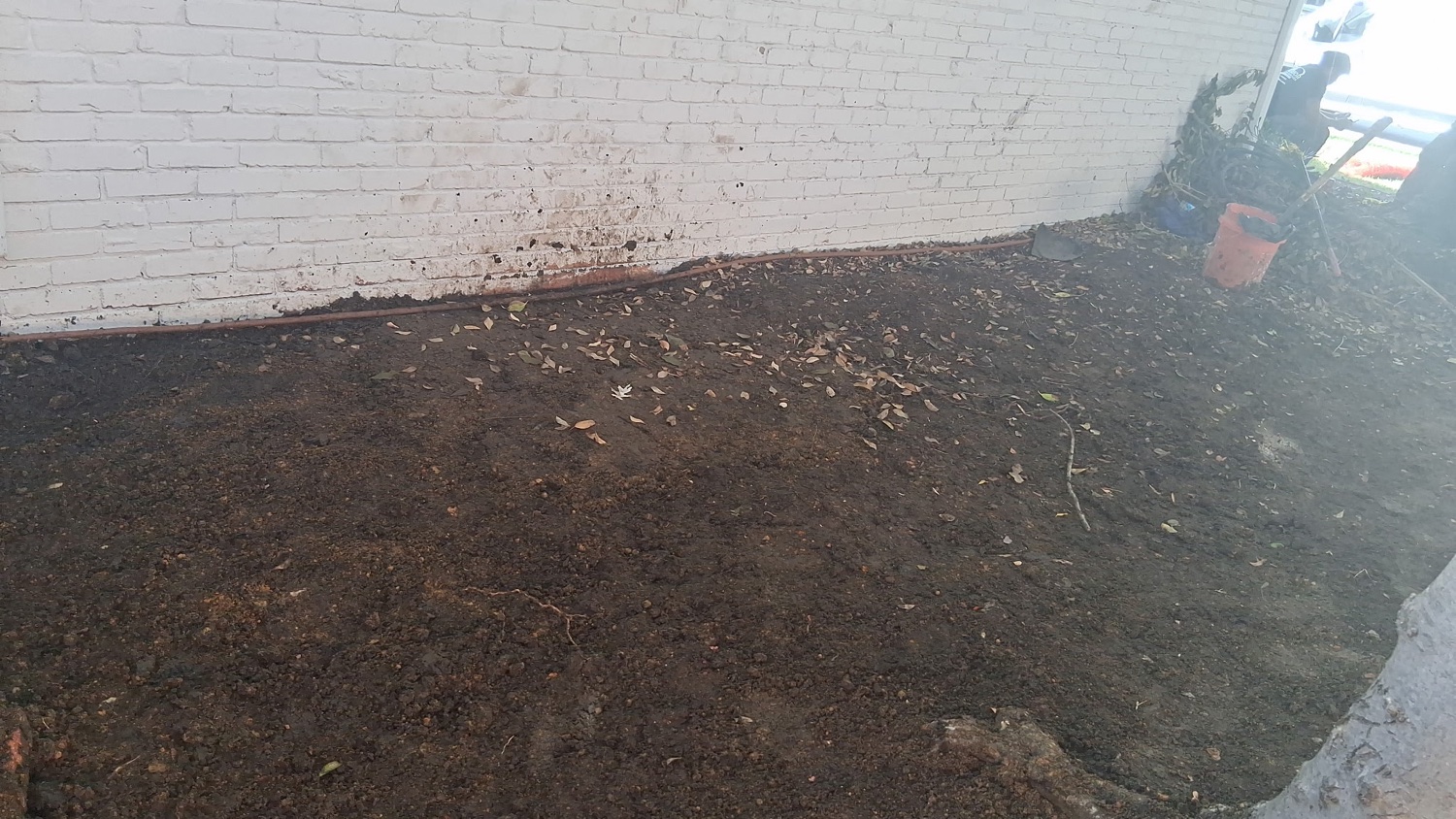
We tunneled 17 feet under the slab from outside to reach the leak instead of breaking through the hallway floor. Once we got to the pipe, we repaired it and closed the tunnel back up.
What Hunter said
We had a great experience with Staggs Plumbing. They ( Randy and Marco) came out to our house immediately, quickly identified the leak, and took the time to explain the issue and show genuine concern throughout the process. The team (Amanda) was extremely communicative, handled our home with care, and was both helpful and friendly from start to finish.
They ultimately repaired the pipe and did excellent work. While plumbing repairs like this are certainly expensive, the cost seemed in line with the market for the scope of the job, and we felt the quality of service and workmanship was worth it.
We really appreciated their responsiveness, professionalism, and attention to detail. I would absolutely recommend Staggs Plumbing to anyone needing reliable plumbing services!
Think you’re hearing water under the floor in Dallas? Start with the meter test, then request service or call (682) 284-0966.
Which repair fits your Dallas home?
| Your situation | Usually the best fit | Why |
|---|---|---|
| 1980s–90s North Dallas slab, first pinhole leak in copper | Spot repair | A small, targeted opening; often done in a day |
| 1950s–60s ranch with galvanized or copper that has leaked before | Reroute or whole-home repipe | Moves water lines out of the slab instead of chasing the next leak |
| Tile, stone or hardwood you want to keep intact | Tunneling | Reaches the pipe from outside the foundation, so floors stay untouched |
| 1920s–40s home with cast-iron or clay drains | Camera inspection, then sewer line repair | Drain leaks don’t show on the water meter and need to be seen first |
Every option comes with a flat-rate written estimate before work begins, and plumbing financing is available for larger repairs and repipes.
Dallas Water Utilities: your leak, your line, your bill
Requesting a leak adjustment
- What it does: when a hidden leak causes a substantial jump in water use, DWU can re-bill the excess water at the lowest rate on its rate scale.
- Limits: up to three months of bills, and one adjustment per 12 months. It doesn’t reimburse repair costs, and it doesn’t apply to wastewater or sewer leaks.
- Deadline: submit within 90 days of the repair date. Repairs must be finished first.
- Documentation: under Dallas city code, the request needs a plumber’s statement or your own written statement that the leak wasn’t reasonably detectable from the surface, that it’s been repaired, and what repair was made. We provide a written description of the leak and the repair.
- Where to send it: leak.adjustments@dallas.gov, fax 214-670-0752, or Dallas City Hall, 1500 Marilla St. Keep paying your bill while it’s reviewed, which can take up to 60 days.
Who owns which pipe? Dallas Water Utilities maintains the public side of the service line and the meter. The property owner is responsible for the private side: the line from the meter to the house and all plumbing inside. DWU is also inventorying service-line materials and notifying customers whose lines are lead, galvanized or unknown. If you got one of those letters and your home also has slab leak symptoms, it’s worth having both lines looked at in one visit.
Questions about your meter or bill: Dallas Water Utilities customer service, 214-651-1441. To report a leak at the street or meter, use Dallas 311.
Will homeowners insurance cover it?
Policies vary, so check yours. Many Texas homeowner policies cover the resulting water damage, and sometimes the cost of accessing the pipe, but not repairing the pipe itself. Foundation movement is often limited or excluded. We document what we find and how we accessed it, and we work directly with your adjuster.
Think you have a slab leak? Start here.
What to do today, in order:
- Do the meter test. Your meter is usually in a box near the curb or property line. Shut off all water inside and out, then watch the leak indicator. Here’s how to detect a hidden water leak.
- Active water or a hot spot? Shut off the main and, if it’s a hot-water line, turn off the water heater.
- Save your last few DWU bills and take photos. You’ll need the dates for the leak adjustment and your insurer.
- Don’t let anyone break concrete to “look.” Locate the leak with detection equipment first.
Dallas neighborhoods we serve
Our Dallas service focuses on the northern and inner neighborhoods: Uptown, Lower Greenville, Lakewood, the M Streets, Preston Hollow, North Dallas, the Galleria corridor and Far North Dallas toward the LBJ Freeway, in ZIP codes 75204, 75205, 75206, 75225, 75229, 75230, 75240 and 75248. Elsewhere in Dallas, including Lake Highlands, Casa View or Oak Cliff, call and we’ll confirm whether your address is in our service area.
Whether you’re off Greenville Avenue, near White Rock Lake, along the Dallas North Tollway, or north of LBJ, the first step is the same: find the leak before opening the floor.
Dallas slab leak FAQ
Why are slab leaks so common in Dallas?
About 48% of Dallas homes were built before 1980, so a lot of pipe under Dallas slabs is decades old. Much of the city also sits on expansive clays, including Houston Black and Austin soils over chalk and shale, that swell when wet and shrink in drought. Aging pipe in moving soil is the classic recipe for a slab leak.
My Dallas home was built in the 1920s or 30s. Is it even on a slab?
Not always. Some homes from that era sit on pier-and-beam foundations with a crawlspace, where water-line leaks are reached from below. Their cast-iron or clay drains can still leak under the house. We check how your home is built before recommending anything.
Will Dallas Water Utilities adjust my bill after a slab leak?
Possibly. DWU’s leak adjustment program can re-bill the excess water from a hidden leak at the lowest rate, for up to three months, once per 12 months. Submit the request within 90 days of the repair with a description of the repair. Approval isn’t guaranteed.
Does the DWU leak adjustment cover a sewer leak under my slab?
No. Dallas Water Utilities says the leak adjustment does not cover or apply to wastewater or sewer leaks, and it doesn’t reimburse plumbing repair costs.
Who is responsible for the water line between the meter and my Dallas house?
The property owner. Dallas Water Utilities maintains the public side and the meter; the owner maintains the private line from the meter onto the property and all plumbing inside the home.
How do you find a slab leak without breaking up my floors?
We isolate the failing line with pressure testing, narrow the location with acoustic listening equipment, and use thermal imaging to read hot-water leaks through the floor. Drain leaks get a sewer camera and a hydrostatic test. Concrete is only opened over a confirmed leak, and many leaks are fixed by rerouting the line without opening the slab at all.
Nearby, we also handle slab leaks in Richardson, Garland and Plano.

