
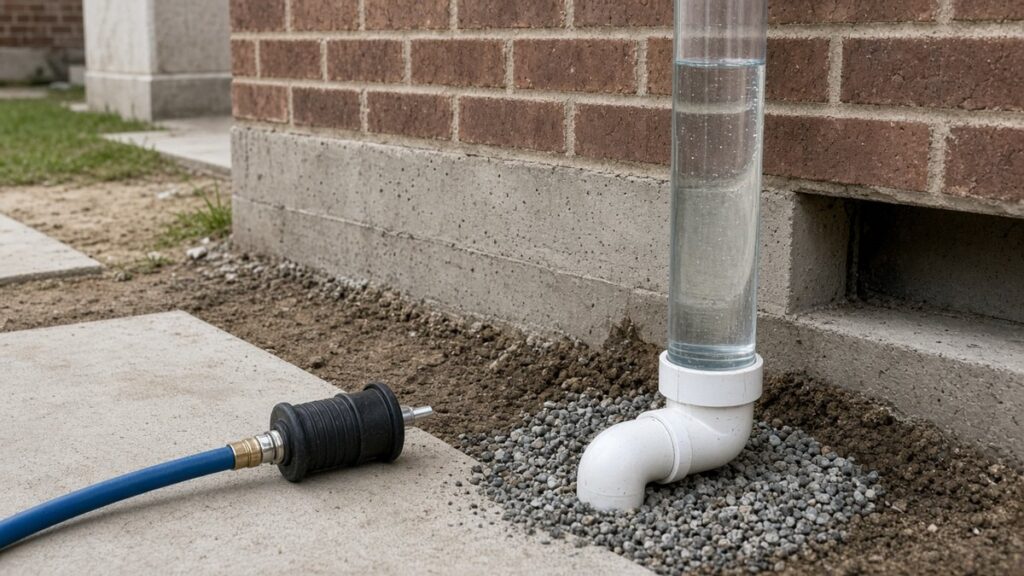
A hydrostatic test pressurizes a plumbing system with water to see whether pressure holds. On a suspected slab leak, a failing test confirms the system cannot hold — but pinpointing where still takes listening gear, isolation tests, and experience.
Homeowners often hear “hydrostatic test” after a spinning meter or a warm floor. The test answers a simple question: does this closed system hold pressure? It does not, by itself, draw an X on the floor. Pair it with acoustic detection and hot/cold isolation for a complete picture. Related reading: leak detection, signs of a slab leak, and acoustic and electronic leak detection.
What the test is
In a typical hydrostatic check on a supply system, the plumber isolates a section, fills it with water, and watches a gauge. If pressure drops, water is leaving the system — a leak. Drain and sewer hydrostatic tests exist too, but this article focuses on the pressure test used when a slab supply leak is suspected.
What a fail means
A failing test means the isolated section cannot hold. It does not automatically mean “break out the living room.” Next steps usually include:
- Confirming whether the loss is on hot, cold, or both
- Listening with acoustic equipment at the slab
- Checking fixtures, water heaters, and visible valves so a simple drip is not mistaken for a slab leak
- Choosing tunnel, break-out, or reroute once the leak is located — see tunneling vs break-out
Why other leaks can hide
A large, noisy leak can mask quieter ones. After the first repair, pressure may still fall — or the meter may still tick — because a second failure was waiting underneath the noise. That is normal investigative sequence, not a surprise add-on invented on the spot. We re-test after repairs so you see the result in writing.
What we put in writing
You get upfront written pricing before work starts. The proposal states what was tested, what failed, where we believe the leak is, and which access method we recommend. Staggs Plumbing is registered as a plumbing contractor in every city we serve. Call (682) 284-0966 if a hydrostatic test was recommended and you want a clear next step.
Frequently asked questions
Is a hydrostatic test the same as leak detection?
No. The test shows whether the system holds pressure. Leak detection finds where water is escaping.
Can a system pass hydrostatic and still have a problem?
Intermittent issues, fixture leaks outside the isolated section, or very small losses can complicate results. We interpret the gauge in context with meter and acoustic findings.
Will you dig based only on a failed test?
We do not open a slab on a gauge reading alone. Pinpointing comes first whenever the layout allows.
Do you re-test after the repair?
Yes. Confirming hold after the repair is how we know the active leak was addressed — and whether another one remains.
Serving Plano from our headquarters on F Avenue? See Plano slab leak repair for local detection and repair details.