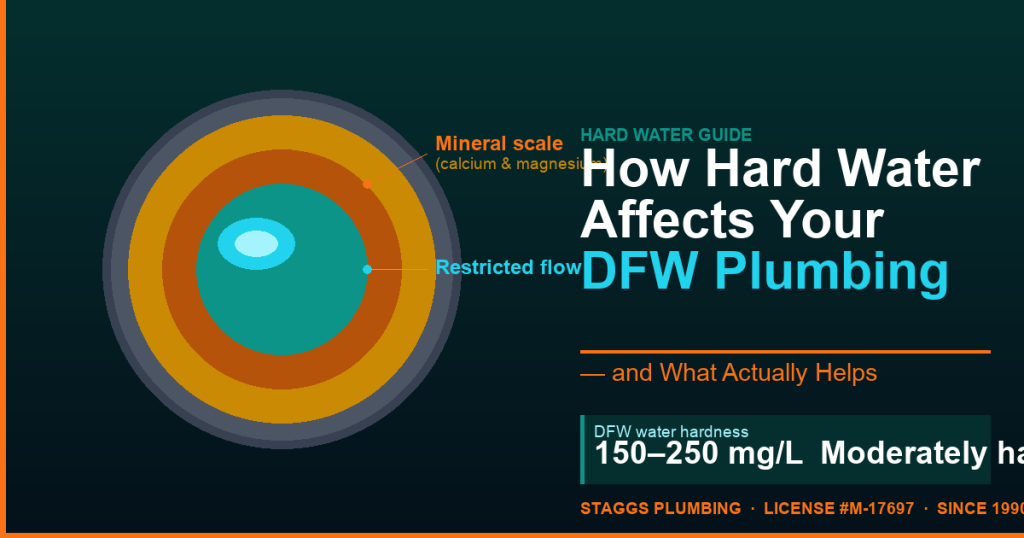
DFW's moderately hard water deposits calcium and magnesium inside every pipe, water heater, and appliance in your home — daily and silently. The effects compound over years: reduced hot water pressure, shorter water heater lifespans, clogged aerators, and white scale on fixtures. The right response is targeted; a whole-house softener is one option among several.
What Hard Water Does Inside Your Pipes
Calcium and magnesium carbonate precipitate out of hot water and settle inside pipes, heat exchangers, and tank linings. In cold-water supply lines, the deposits build more slowly but still accumulate at elbows, tees, and in the aerators of faucets and showerheads. Aerators — the small screen fittings on faucet spouts — clog most visibly and most often, making them the earliest indicator that your home has hard water mineral activity.
In hot-water lines, the mineral deposition accelerates because heat drives precipitation. Inside a water heater tank, the deposits fall to the bottom and compact into a layer of sediment. Inside a tankless heat exchanger, they coat the fins and restrict flow.
The Water Heater Problem Is the Most Significant
In DFW homes, water heater failure from hard water damage is the single most expensive consequence of ignoring mineral buildup. A tank water heater loses efficiency as the sediment layer grows — the burner or heating element works harder to heat through the insulating layer, increasing energy consumption and wearing the element faster. Once the sediment compacts fully, a flush risks disturbing the layer and exposing corrosion beneath it.
For tankless water heaters, scale coating the heat exchanger causes overheat faults, reduced output, and early failure. Most manufacturers require documented annual descaling to maintain warranty coverage. In DFW's moderately hard water, descaling once per year is the correct interval.
What Actually Helps — Matched to the Problem
Aerator and showerhead clogging: Remove and soak in white vinegar (undiluted, overnight). Scale dissolves. Replace aerators yearly — they cost $3–$8. This is a DIY maintenance task, not a plumbing call.
Tank water heater sediment: Annual flush by a licensed plumber clears loose sediment before it compacts. Starting annual maintenance on a unit under 5 years old is significantly more effective than starting on a 10-year-old unit with years of compacted buildup.
Tankless heat exchanger scale: Annual descaling by a certified installer (Rinnai, Navien, or Rheem certification matters — the procedure varies by unit). Isolation valves must be present; if your tankless unit doesn't have them, they should be installed at the next service.
Dishwasher and washing machine buildup: Running a citric acid cycle monthly (1–2 cups of citric acid dissolved in hot water, run through empty cycle) prevents mineral deposits in dish spray arms and washing machine drums.
Is a Water Softener Worth It in DFW?
DFW's water is moderately hard — not the extreme hardness found in some West Texas communities. A salt-based water softener completely removes the hardness minerals and eliminates all of the downstream maintenance tasks described above. It also extends appliance lifespans and reduces soap usage. The tradeoffs: cost ($1,500–$3,000 installed), ongoing salt expense, and slightly elevated sodium in softened water (relevant for households with sodium-restricted diets). A point-of-use reverse osmosis system under the kitchen sink handles drinking and cooking water separately.
For DFW homes with newer appliances and a disciplined annual maintenance schedule, a softener is optional — the maintenance addresses the same underlying problem. For homes with significant appliance investment or households that prefer minimal ongoing maintenance, a softener pays for itself over time. Staggs Plumbing can assess your specific situation. Call 682-284-0966.