



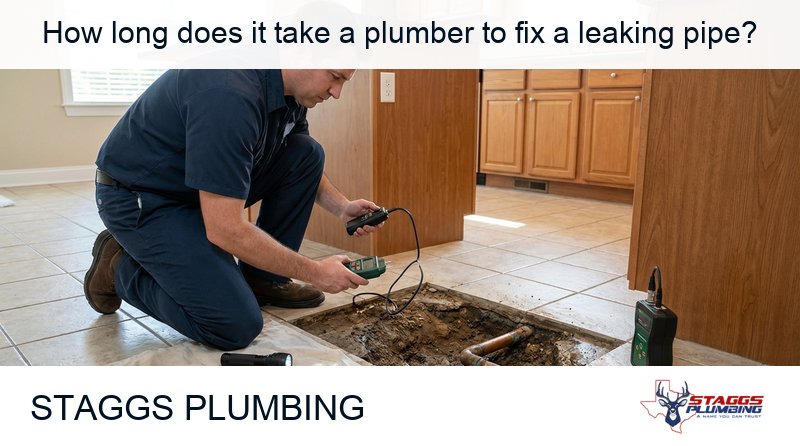
How Long Does It Take a Plumber to Fix a Leaking Pipe?
Most leaking pipe repairs take 30 minutes to 2 hours for a licensed plumber to complete. A visible leak under your kitchen sink might be done in 30 to 45 minutes. A leak hidden inside a wall or under your foundation could take 4 hours or more once you factor in detection and access.
You’re probably trying to figure out if you need to block off your whole day or just a morning. Here’s the short version: for straightforward repairs where the leak is accessible, plan for 1 to 2 hours including diagnosis. You don’t necessarily need to hover nearby the entire time, but you should be home when the plumber arrives so they can assess the situation and give you a time estimate before starting work.
The fastest repairs happen when the leak is visible, accessible, and involves a simple fix like tightening a compression fitting or replacing a worn washer. These can wrap up in under 30 minutes. The longest repairs involve hidden leaks that require cutting into drywall or concrete, which can extend into a half-day or full-day job.
This guide breaks down what affects repair time, typical durations for common leak types, and what to expect during the service call so you can plan accordingly.
Quick Answer: Typical Repair Times by Leak Type
| Leak Type | Typical Time | Why |
|---|---|---|
| Visible joint or fitting leak | 30-45 minutes | Easy access, simple repair |
| Under-sink supply line | 45 minutes-1.5 hours | May need parts replacement |
| Exposed pipe in basement/crawlspace | 1-2 hours | Access varies by home |
| Leak inside wall (after access cut) | 2-4 hours | Includes drywall removal |
| Slab leak | 4-8+ hours | Requires specialized detection and access |
These ranges assume the plumber has common parts on their truck. Unusual pipe sizes or materials can add time if a supply house run is needed.
What Affects How Long the Repair Takes
Four factors determine whether your repair is a quick fix or a longer project:
Location and accessibility. A leak you can see and touch gets fixed faster than one buried inside a finished wall or beneath your foundation. Hidden leaks require detection time before any wrench turns.
Leak severity. A slow drip at a visible joint is simpler than a pipe that’s split open and actively spraying. Severe leaks may require shutting off water to larger sections of your home while the plumber works.
Pipe material and age. Modern PVC and PEX pipes repair quickly with standard fittings. Older galvanized steel or corroded copper can complicate repairs because cutting into aging pipe sometimes reveals additional weak spots.
Diagnosis time. Some leaks are obvious. Others require pressure testing, camera inspection, or moisture detection to pinpoint. Budget an extra 30 to 60 minutes when the leak source isn’t immediately clear.
Common Leak Scenarios and What to Expect
Fixture connection leaks. Supply lines under sinks, toilets, and behind washing machines commonly develop leaks at connection points. These typically take 30 minutes to 1 hour because the plumber can see the problem immediately and carry standard replacement parts.
Pipe joint failures. Soldered copper joints or glued PVC connections can fail over time. If the joint is accessible, expect 1 to 2 hours. The plumber cuts out the failed section, prepares the pipe ends, and installs a new coupling or fitting.
Leaks inside walls. When water stains appear on drywall but you can’t see the pipe, the plumber first locates the leak using moisture meters or thermal imaging. Then they cut an access hole, make the repair, and test the fix. Plan for 2 to 4 hours minimum. Drywall repair is typically separate.
Pipe bursts. A burst pipe is an emergency that gets priority attention. The active repair often takes 1 to 2 hours once the plumber arrives, but water damage mitigation and any necessary pipe replacement can extend the total project.
What Happens During a Plumber Visit
Knowing the process helps you plan your time:
- Arrival and assessment (10-20 minutes). The plumber examines the leak, checks water pressure, and may run water to observe the failure point.
- Time and cost estimate. Before starting work, you should receive a clear estimate of how long the repair will take and what it will cost. At Staggs Plumbing, we provide upfront pricing so you know what to expect.
- Water shutoff. Depending on the leak location, the plumber shuts off water to the affected fixture, that section of pipe, or the whole house.
- Repair work. This is the variable portion. A fitting replacement takes minutes. Cutting and soldering pipe sections takes longer.
- Testing and inspection. The plumber turns water back on and checks for leaks at normal pressure. They’ll run the repaired section for several minutes to confirm the fix holds.
- Cleanup and walkthrough. You should see where the repair was made and understand any follow-up needs like drywall patching.
When Repairs Take Longer Than Expected
Sometimes a 1-hour estimate becomes a 3-hour job. Here’s what causes delays:
Hidden damage. Opening a wall to fix one leak can reveal corroded pipe sections that also need attention. A responsible plumber will discuss options rather than patch and hope.
Parts availability. Older homes sometimes have non-standard pipe sizes or discontinued fittings. If the right part isn’t on the truck, a supply run adds 30 to 60 minutes.
Access complications. Pipes routed through tight spaces, behind HVAC equipment, or under cabinets take longer to reach safely.
Multiple leak sources. What looks like one leak can actually be two separate failures. Pressure testing after the first repair sometimes reveals the second.
If your repair runs long, your plumber should communicate the reason and any cost adjustment before continuing.
Signs You Should Call Now vs. Can Wait
Not every leak demands same-day service. Here’s how to decide:
| Call Now | Can Schedule This Week |
|---|---|
| Water spraying or pooling | Slow drip into a bucket |
| Leak near electrical panel | Minor fixture drip |
| Water heater leak | Outdoor hose bib drip |
| Ceiling stain growing | Small stain, not spreading |
| No water to fixtures | Condensation on pipes |
When in doubt, a quick phone call to describe the situation helps determine urgency. Active leaks that could cause water damage warrant same-day attention.
Frequently Asked Questions
Can a plumber fix a leak in one visit or will they need to come back?
Can a plumber fix a leak in one visit or will they need to come back?
Most leaking pipe repairs complete in a single visit. The main exceptions are slab leaks requiring specialized equipment, leaks where parts must be ordered, or situations where additional damage is discovered that requires a separate repair phase.
How long does it take to repair a slab leak?
How long does it take to repair a slab leak?
Slab leaks are a special category. Detection alone can take 2 to 4 hours with electronic leak detection equipment. The repair method varies from tunneling under the slab to rerouting the pipe through the attic. Total time ranges from half a day to multiple days depending on the approach. This warrants its own detailed discussion with your plumber.
Does repair time affect cost?
Does repair time affect cost?
Yes. Most plumbers charge based on time and materials or flat-rate pricing that accounts for typical repair duration. A 30-minute fitting replacement costs less than a 4-hour wall repair. Getting an upfront estimate before work begins protects you from surprises.
Should I shut off the water before the plumber arrives?
Should I shut off the water before the plumber arrives?
If you can locate your main shutoff valve and the leak is actively causing damage, yes. Stopping water flow limits damage while you wait. If the leak is minor and contained, you can leave it for the plumber to assess first.
What if the leak is behind tile or in a finished wall?
What if the leak is behind tile or in a finished wall?
Accessing leaks behind tile adds time and complexity. The plumber will discuss options: cutting through tile (which requires tile repair afterward) or accessing from an adjacent area if possible. Expect the access and repair portion to take 3 to 5 hours minimum.
Staggs Plumbing has served Plano, TX homeowners for over 20 years. Our licensed technicians arrive with fully stocked trucks and provide upfront time and cost estimates before starting any repair. If you’re dealing with a leaking pipe, call tel:+19728338660 to schedule service or request a same-day appointment for urgent situations.
If you enjoyed this article, check out these other articles regarding Leak Detection:
Can Plumbers Detect Leaks Behind Walls? Yes, Here's How
Drip by Drip: How to Detect Water Leaks in Your Home