


Frozen Pipes in Dallas? Here’s Exactly What to Do Right Now
Dallas-Fort Worth homes weren’t built for hard freezes. Your pipes run through attics, along exterior walls, and under slab foundations with little to no insulation, because North Texas building codes have always prioritized cooling over cold protection. When temperatures drop below 20 degrees, those exposed lines can freeze in as little as 3 to 6 hours, and a single burst pipe can release over 250 gallons of water per day through a crack no wider than a pencil eraser.
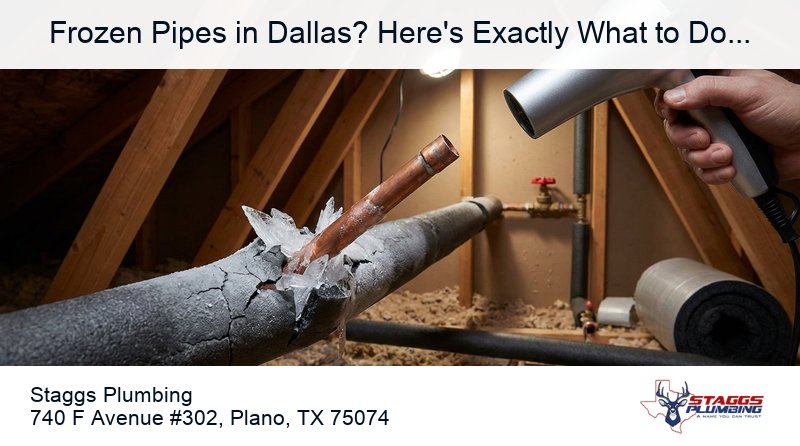
If a freeze is heading your way tonight, start here: drip your faucets (both hot and cold lines), open cabinet doors under sinks on exterior walls, disconnect garden hoses, and keep your thermostat at 55 degrees or higher. If your pipes are already frozen and nothing comes out when you turn the tap, apply gentle heat with a hair dryer or warm towels and never use an open flame. If a pipe has already burst, shut off your main water valve immediately (typically near the front of your home where the water line enters, or near your water meter), then turn off your water heater to prevent damage to the unit.
Not sure whether you can handle this yourself or need emergency help? If you can see the frozen section and access it safely, careful thawing is often a DIY fix. But if you have no water flow after thawing, see water pooling from walls or ceilings, or suspect a leak under your slab, that’s a call for a licensed plumber.
This guide covers why DFW homes are uniquely vulnerable, step-by-step prevention before a freeze, safe thawing techniques, burst pipe emergency response, which pipes freeze first, and long-term upgrades to protect your home for good.
Why Dallas Homes Are Especially Vulnerable to Frozen Pipes
Northern homes are designed with freeze protection built into their architecture: insulated basements, deep-set water mains, and pipe runs through heated interior spaces. Dallas-Fort Worth homes take the opposite approach. Supply lines are routed through unconditioned attics to save on construction costs. Exterior walls hold pipes with minimal insulation. And slab foundations mean there’s no basement buffer between your plumbing and the ground.
North Texas sits on expansive clay soil that shrinks in summer drought and swells during rain. This constant movement stresses under-slab pipes year-round. When a freeze event hits, any pipe that’s already weakened by soil movement becomes even more vulnerable to cracking.
The 2021 Winter Storm Uri exposed how dangerous this combination is. Across Texas, homeowners reported burst pipes with average damage costs reaching $27,000 per incident. That wasn’t a one-time fluke. DFW gets hard freezes every few years, and the homes haven’t changed.
| DFW Vulnerability | Why It Matters |
|---|---|
| Attic-routed supply lines | Unheated attic air drops to outdoor temps within hours |
| Slab foundations | No basement insulation layer; under-slab pipes sit in cold ground |
| Minimal pipe insulation | Southern building codes don’t require freeze protection |
| Expansive clay soil | Soil movement pre-stresses pipes, making freeze cracks more likely |
| Exterior wall routing | Pipes against outer walls lose heat fastest |
How to Prevent Frozen Pipes Before a DFW Freeze
When a freeze warning hits, you have a narrow window to protect your home. Work through this checklist before temperatures drop:
- Drip faucets on exterior walls. Let both hot and cold lines trickle. Moving water resists freezing. Focus on kitchen sinks, bathroom faucets, and any fixture against an outside wall.
- Open cabinet doors under kitchen and bathroom sinks to let warm air reach the pipes.
- Disconnect and drain garden hoses. Close the interior shutoff valve for each hose bib if you have one.
- Set your thermostat to 55 degrees or higher and keep it there overnight. Don’t lower the heat at bedtime.
- Locate your main water shutoff valve. In most DFW homes, it’s near the front of the house where the supply line enters through the slab, or at the meter box near the street. Test it now so you aren’t searching during an emergency.
- Insulate exposed pipes in the attic, garage, or crawlspace with foam sleeves or heat tape. Hardware stores stock these for under $5 per 6-foot section.
If you’re leaving town during a freeze warning, don’t turn off your heat. Keep the thermostat at 55 degrees minimum, open all cabinet doors, and ask a neighbor to check on the house daily.
What to Do If Your Pipes Are Already Frozen
You’ll know a pipe is frozen when you turn a faucet and nothing comes out, or only a weak trickle appears. Here’s how to thaw safely:
Safe heat sources:
- Hair dryer aimed at the frozen section
- Warm towels wrapped around the pipe
- Portable space heater placed nearby (not touching the pipe)
- Heat lamp directed at the area
What NOT to do:
- Never use a propane torch, blowtorch, or open flame. This can crack the pipe instantly or start a fire.
- Don’t pour boiling water directly on a frozen pipe. The thermal shock can split it.
- Don’t leave a space heater unattended near combustible materials.
Start heating from the faucet end and work backward toward the frozen section. Keep the faucet open so melting water can flow out and relieve pressure.
Signs a frozen pipe has already cracked (even if you don’t see water yet):
- Frost or bulging on a visible pipe section
- Damp drywall, warped baseboards, or water stains appearing on walls or ceilings
- A hissing sound behind a wall
- Water meter spinning when all fixtures are off
If you see any of these signs, stop thawing and move to the burst pipe emergency steps below.
When a Pipe Bursts: Emergency Steps
A burst pipe is an active emergency. Every minute counts. Follow this sequence:
- Shut off the main water valve. This stops the water supply to your entire home. In most DFW slab homes, it’s a gate or ball valve near the front of the house or at the meter box by the street.
- Turn off your water heater. For gas units, switch the control to “pilot” or “off.” For electric units, flip the breaker. Running a water heater with no water flow can damage the tank or elements.
- Open faucets to drain remaining water. This reduces pressure in the lines and limits additional water that can leak out.
- Turn off electricity in affected areas if water is near outlets, switches, or your electrical panel.
- Document everything for insurance. Take photos and video of the damage, the burst location, and any standing water before cleanup begins.
- Call a licensed plumber for emergency repair. Burst pipes during a freeze require professional pipe repair, not a temporary patch. Staggs Plumbing offers 24/7 emergency response with an average dispatch time of 1.4 hours for active leaks across the Plano and greater DFW area.
Do not attempt to patch a burst pipe yourself with tape or clamps as a permanent fix. These fail under pressure and delay the real repair.
Which Pipes Freeze First in North Texas Homes
Not every pipe in your home faces the same risk. Knowing which ones freeze first helps you prioritize prevention and inspect the right areas.
| Location | Risk Level | Why |
|---|---|---|
| Attic supply lines | Highest | Attic temperatures match outdoor air; copper lines conduct cold rapidly |
| Exterior hose bibs | High | Directly exposed to outdoor air; often forgotten during prep |
| Pipes in uninsulated garage walls | High | Garages rarely have heat; pipes against exterior walls get coldest |
| North-facing exterior wall pipes | High | Receive no direct sunlight; stay colder longer |
| Under-slab supply lines | Moderate | Ground insulates somewhat, but shallow lines near foundation edges are vulnerable in prolonged freezes |
| Interior wall pipes | Low | Surrounded by heated living space on both sides |
In 1970s and 1980s Plano-area homes, copper supply lines often run through the attic before dropping down to individual fixtures. These attic runs are the first to freeze and the most common source of burst pipe calls during DFW cold snaps. If you have an older home in Plano, Allen, McKinney, or Richardson, checking your attic plumbing should be your first step.
Can attic pipes freeze even with your heat running? Yes. Your HVAC system heats your living space, not your attic. Attic temperatures can reach outdoor ambient within 1 to 2 hours of a hard freeze, regardless of your thermostat setting.
DIY vs. Call a Plumber: When Frozen Pipes Need Professional Help
Some frozen pipe situations are safe to handle yourself. Others need a licensed professional immediately.
| Situation | DIY or Pro? | Why |
|---|---|---|
| Frozen pipe you can see and access (under sink, exposed in garage) | DIY with caution | You can apply safe heat and monitor for cracks |
| Frozen pipe in an attic with visible access | DIY possible | Use a hair dryer or space heater; watch for leaks |
| No water flow after thawing attempts | Call a pro | Likely a burst or blockage you can’t reach |
| Water pooling from walls, ceiling, or baseboards | Call a pro immediately | Active leak behind a wall or above a ceiling |
| Water meter spinning with all faucets off | Call a pro immediately | Hidden leak, possibly under the slab |
| Suspected slab leak (warm spots on floor, unexplained water bill spike) | Call a pro immediately | Slab leaks worsen fast in DFW clay soil and can trigger foundation damage |
When you do need emergency help during a freeze, response time matters. Every plumber in the metroplex is fielding calls, and wait times can stretch to 12 hours or more with some companies. Staggs Plumbing (TX License #17697) maintains 24/7 emergency dispatch with stocked service trucks across the DFW area, and Family Plan members receive priority scheduling with a reduced emergency trip fee of $75 instead of $149.
Long-Term Freeze Protection for DFW Homes
If you’re tired of worrying every time a freeze warning pops up on your phone, these upgrades eliminate the risk instead of just managing it each winter:
Pipe insulation. Foam pipe sleeves on all exposed lines in the attic, garage, and crawlspace cost $1 to $3 per linear foot for materials. For attic runs longer than 20 feet, self-regulating heat tape provides active warming that turns on automatically when temperatures drop. Heat tape costs $3 to $8 per foot installed.
PEX repiping for freeze-prone lines. PEX tubing expands under pressure better than rigid copper, making it more resistant to freeze bursting. It won’t prevent freezing, but it reduces the chance of a catastrophic crack. Homes with copper attic runs are strong candidates for a targeted PEX reroute.
Whole-house shutoff upgrades. Replacing an old, corroded gate valve with a modern quarter-turn ball valve means you can shut off water in seconds during an emergency instead of struggling with a valve that hasn’t been turned in years. Smart shutoff systems with leak sensors can cut the water automatically if a burst is detected while you’re away.
Recirculation systems. A hot water recirculation pump keeps warm water moving through your lines, which helps prevent freezing in runs that are far from the water heater.
With 40+ years of experience working on DFW homes, Staggs Plumbing has seen how freeze damage patterns repeat in North Texas construction. Homes built in the 1970s through 1990s across Plano, Allen, Frisco, and McKinney share the same vulnerabilities: copper lines in the attic, minimal insulation, and slab foundations over expansive clay soil. A one-time winterization upgrade can prevent thousands of dollars in future damage.
Frequently Asked Questions
How much does it cost to repair a burst pipe in Dallas?
How much does it cost to repair a burst pipe in Dallas?
A straightforward burst pipe repair on an accessible line typically runs $200 to $600 in the DFW area. If the burst is behind a wall, expect $500 to $1,200 including drywall access and patching. Under-slab burst pipe repairs range from $1,500 to $4,500 depending on the method (spot repair, tunneling, or reroute). Water damage restoration from a catastrophic burst can push total costs to $10,000 or more.
Does homeowners insurance cover frozen pipe damage in Texas?
Does homeowners insurance cover frozen pipe damage in Texas?
Most Texas homeowners policies cover sudden water damage from burst pipes, including the resulting damage to floors, walls, and belongings. However, the pipe repair itself is often excluded. Coverage varies by policy, so check with your insurer before a freeze event. Document all damage with photos and video immediately.
Can PEX pipes freeze and burst, or only copper and galvanized?
Can PEX pipes freeze and burst, or only copper and galvanized?
PEX can freeze, but it’s more resistant to bursting than copper or galvanized steel because it expands under pressure. It isn’t freeze-proof though. In a sustained hard freeze, PEX will eventually fail. The advantage is that PEX buys you more time and handles the expansion-contraction cycle better than rigid materials.
Should I leave my heat on if I’m going out of town during a freeze warning?
Should I leave my heat on if I’m going out of town during a freeze warning?
Yes. Keep your thermostat set to 55 degrees or higher. Open all cabinet doors under sinks on exterior walls. Shut off the main water supply and drain the lines if you’ll be gone for more than 3 days during freezing conditions. Ask someone to check on the house daily.
Can a frozen pipe cause a slab leak?
Can a frozen pipe cause a slab leak?
Yes. Under-slab copper lines that freeze can crack at joints or along weakened sections. In DFW’s expansive clay soil, the water from a slab leak then saturates the soil, causing it to swell and push against the foundation. This creates a feedback loop where the leak causes soil movement, which puts stress on other pipes, potentially causing additional leaks.
When a freeze hits the Dallas-Fort Worth area, the difference between minor inconvenience and major property damage comes down to preparation and response time. If your pipes are frozen or burst right now, call Staggs Plumbing at 972-833-8660 for 24/7 emergency service across Plano, Dallas, and the surrounding DFW communities. With 40+ years of North Texas plumbing experience, TX Master Plumber License #17697, and a 4.9 Google rating across 280+ reviews, your home is in qualified hands.
If you enjoyed this article, check out these other articles regarding Frozen Pipes:
5 Common Winter Plumbing Problems in Plano
Avoid Frozen Pipes This Winter