


Are Plumbers Licensed in Texas? What Plano Homeowners Need to Know
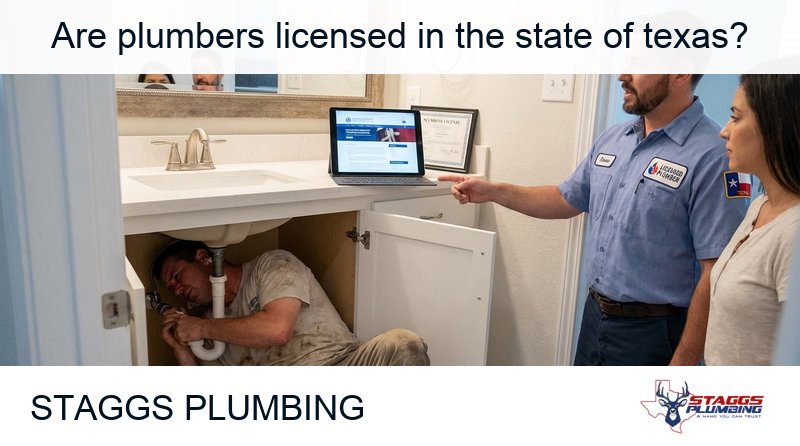
Yes, plumbers must be licensed in Texas. The Texas State Board of Plumbing Examiners (TSBPE) regulates all plumbing work statewide under Chapter 1301 of the Texas Occupations Code. This means any licensed plumber working in your Plano home should hold a valid state license, have passed rigorous examinations, and carry at least $300,000 in liability insurance.
Why does this matter to you? Licensing exists to protect homeowners from substandard work, safety hazards, and financial loss. When you hire a licensed plumber, you’re getting someone accountable to a regulatory board who can lose their livelihood for poor workmanship. Unlicensed workers have no such accountability.
Can anyone legally do plumbing work in your home? No. Texas law requires licensure for nearly all plumbing work. The only exception is homeowners doing work on their own primary residence, and even then, that work must pass inspection. Anyone offering plumbing services commercially must hold a license.
This guide covers the 4 Texas plumbing license types, how to verify credentials in 30 seconds online, the real risks of hiring unlicensed workers, and the exact questions to ask before any plumber enters your home.
Texas Plumbing License Types Explained
Texas issues 4 distinct plumbing licenses, each requiring progressively more experience and examination:
| License Type | Experience Required | Supervision Needed | Can Pull Permits |
|---|---|---|---|
| Tradesman Limited | 4,000 hours | Must work under Journeyman/Master | No |
| Journeyman | 8,000 hours | Can work independently | No |
| Master | 16,000+ hours | Supervises others | Yes |
| Plumbing Inspector | Varies | N/A | N/A |
For homeowners, the key distinction is permit-pulling authority. Only Master plumbers can obtain permits for plumbing work. If your project requires a permit, the company you hire must have a Master plumber on staff.
Journeyman plumbers can perform all residential work independently but must work for a company with a Master plumber when permits are involved. Tradesman Limited license holders handle specific tasks like water heater installations under supervision.
Why Licensing Matters for Plano Homeowners
Licensed plumbers in Texas must meet 3 requirements that directly protect you:
Examination: Every license level requires passing a state-administered exam covering the Uniform Plumbing Code, Texas regulations, and safety standards. This isn’t a formality. Pass rates hover around 70%, meaning 3 in 10 applicants fail.
Insurance: Texas law mandates $300,000 minimum liability coverage for all licensed plumbers. If a licensed plumber floods your home or creates a gas leak, their insurance covers the damage. Unlicensed workers carry no required coverage.
Accountability: Licensed plumbers answer to the TSBPE. The board investigates complaints, issues fines, and revokes licenses. In 2023 alone, the board took disciplinary action against dozens of licensees. This oversight gives you recourse if something goes wrong.
How to Verify a Texas Plumber’s License
Verifying a license takes 30 seconds using the TSBPE online database:
- Visit the TSBPE license search at tsbpe.texas.gov
- Enter the plumber’s name or license number
- Confirm the license is “Active” status
- Note the license type (Master, Journeyman, or Tradesman)
- Check the expiration date
You can also call the TSBPE directly at (512) 936-5200 during business hours.
When a company sends someone to your home, ask for their individual license number before work begins. Legitimate plumbers expect this question and provide the information readily. Any hesitation or excuse should raise immediate concerns.
What Happens If You Hire an Unlicensed Plumber
Hiring an unlicensed plumber creates 4 serious problems:
Failed Inspections: Any permitted work done by an unlicensed person will fail city inspection. You’ll pay again to have the work redone by a licensed plumber, plus reinspection fees.
Insurance Claim Denial: Homeowner’s insurance policies typically exclude coverage for damage caused by unlicensed contractors. A water heater installed improperly by an unlicensed worker that later floods your home? You’re likely paying out of pocket.
Code Violations: Work that doesn’t meet code can surface during home sales. Buyers’ inspectors flag unpermitted or non-code-compliant plumbing, potentially killing deals or requiring expensive corrections before closing.
Safety Hazards: Gas line work by unqualified individuals creates explosion and carbon monoxide risks. Improper drain connections can allow sewer gas into your home. These aren’t theoretical concerns.
Questions to Ask Before Hiring a Plumber
Use this checklist before any plumber starts work in your Plano home:
| Question | Why It Matters |
|---|---|
| What’s your Texas plumbing license number? | Allows you to verify credentials online |
| Who is the Master plumber on your team? | Confirms permit-pulling capability |
| Can I see your certificate of insurance? | Proves current liability coverage |
| Will you pull the permit for this work? | Establishes legal compliance |
| Is your license in good standing with the state? | Flags any disciplinary issues |
A straightforward plumber answers these questions without hesitation. Evasive responses, claims that “licensing isn’t really required,” or offers to skip permits for a discount are warning signs.
Frequently Asked Questions
Can a homeowner do their own plumbing work without a license?
Can a homeowner do their own plumbing work without a license?
Yes, but with limits. Texas allows homeowners to perform plumbing work on their own primary residence without a license. However, the work must still meet code and pass inspection when permits are required. You cannot hire unlicensed help and claim you did the work yourself.
Do plumbers from other states need a Texas license?
Do plumbers from other states need a Texas license?
Yes. Texas doesn’t recognize out-of-state plumbing licenses through reciprocity. A plumber licensed in Oklahoma or Louisiana must obtain a Texas license before working here. This applies even to plumbers with decades of experience elsewhere.
How do I report an unlicensed plumber?
How do I report an unlicensed plumber?
File a complaint with the TSBPE online at tsbpe.texas.gov or call (512) 936-5200. You can also report to the Texas Attorney General’s Consumer Protection Division. Include any contracts, receipts, photos, and communication records.
What’s the penalty for doing plumbing without a license?
What’s the penalty for doing plumbing without a license?
Operating without a license is a Class C misdemeanor in Texas, with fines up to $500 per violation. Repeat offenders face enhanced penalties. The TSBPE actively investigates unlicensed activity and works with local authorities on enforcement.
When you need plumbing work in Plano, Staggs Plumbing brings fully licensed plumbers with verifiable credentials and the insurance coverage Texas law requires. Call 682-284-0966 to schedule service with a team you can trust.
If you enjoyed this article, check out these other articles regarding General Plumbing:
Stop Noisy Plumbing in Your Plano Home
Texas Now Charges $4,000 Per Violation for Unlicensed Plumbing